Ashtakoot Guna Milan: The Science and Math Behind Vedic Marriage Compatibility
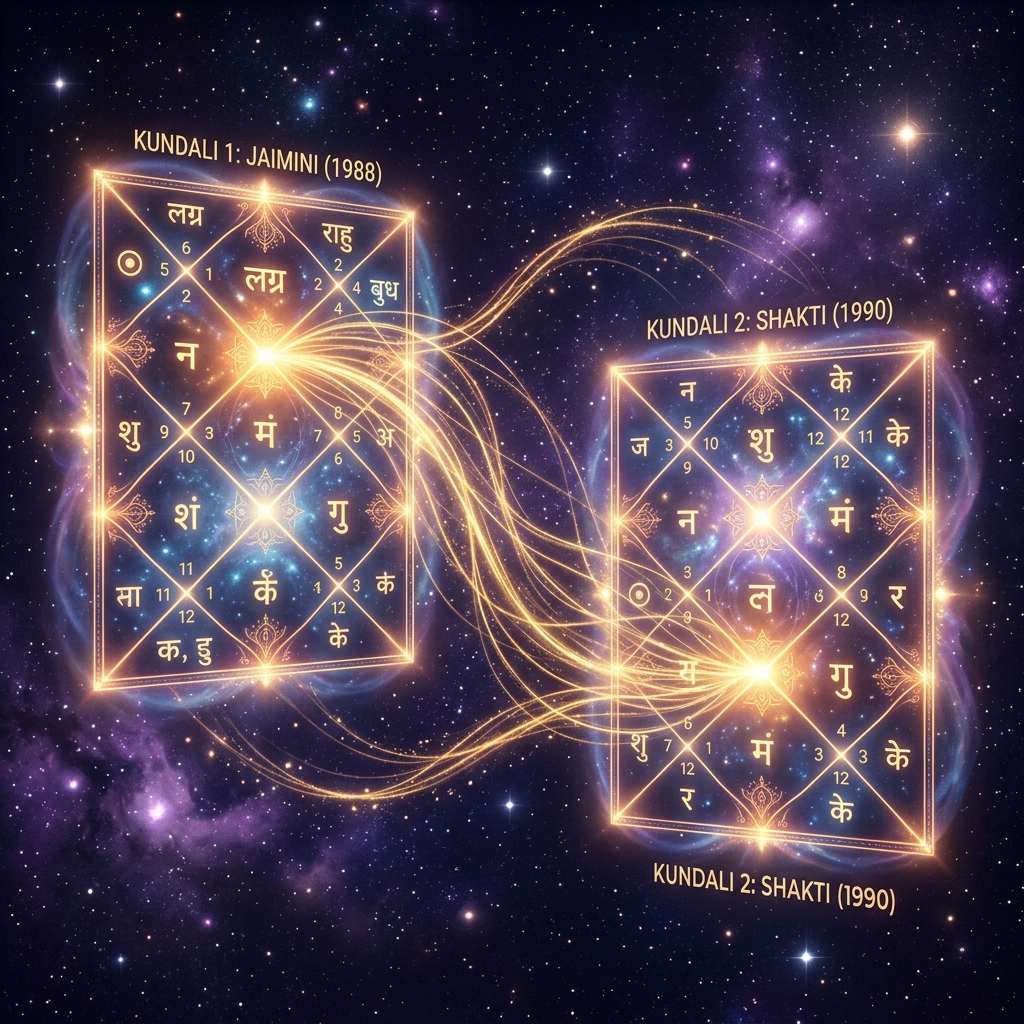
In Hindu culture, marriage is not merely a contract between two individuals; it is the union of two souls across lifetimes. To ensure this alignment, ancient Rishis developed a sophisticated mathematical screening tool: Ashtakoot Guna Milan. This system awards a score out of 36 based on the positions of the Moon in both partners' horoscopes.
However, modern matchmaking has reduced this nuanced science to a single number. Parents panic if the score is 17, and celebrate if it is 30. To understand the true depth of Guna Milan, we must look beneath the raw score and understand what these parameters actually measure.
The Eight Koots (Parameters) of Compatibility
The term 'Ashtakoot' literally translates to 'eight categories'. Each category measures a specific aspect of physical, mental, and spiritual compatibility, carrying a weight proportional to its importance:
- •1. Varna (1 Point): Measures spiritual and ego compatibility, evaluating the natural work-life inclinations of both partners.
- •2. Vashya (2 Points): Assesses mutual attraction and the balance of power or influence between partners.
- •3. Tara (3 Points): Evaluates the health, longevity, and well-being of the couple after marriage.
- •4. Yoni (4 Points): Measures physical, sexual compatibility and biological attraction, symbolized by animal archetypes.
- •5. Graha Maitri (5 Points): Gauges the friendship and mental compatibility of the Moon sign lords, representing daily communication and shared intellectual interests.
- •6. Gana (6 Points): Compares temperaments—Deva (divine), Manushya (human), and Rakshasa (demonic)—defining behavioral patterns and alignment of habits.
- •7. Bhakoot (7 Points): Evaluates emotional chemistry, family wealth, and prosperity based on the relative distance between the Moon signs.
- •8. Nadi (8 Points): The most critical parameter, measuring health, genetic compatibility, and the likelihood of healthy progeny.
The Fallacy of the Raw Guna Score
A common mistake is treating the raw score as a final verdict. The Ashtakoot system is purely a lunar assessment—it only compares the Moon's placement. While the Moon controls our emotions and daily reactions, it is not the entire chart.
"A 30-point Guna match with an unresolved Nadi Dosha and bad Venus placements can end in distress, while a 20-point match with ascendant lord friendship can stand the test of time."
Consider this: If the ascendant lords (Lagneesha) of both partners are natural enemies (e.g., Sun and Saturn), they will have fundamentally different approaches to life. Even if their Moon signs match perfectly (resulting in a high Guna score), their physical and outer life paths may constantly clash. Conversely, if their Lagna lords are friends, they will navigate differences with ease.
Understanding Nadi and Bhakoot Dosha
If partners share the same Nadi (Vata, Pitta, or Kapha humors in Ayurveda), it results in Nadi Dosha, and 0 out of 8 points are awarded. In ancient times, this was a strict filter to prevent genetic issues in descendants. Similarly, Bhakoot Dosha occurs when the Moon signs sit in awkward ratios like 6-8 (Shadastak) or 9-5, indicating sudden emotional distance or financial instability.
Cosmic Remedy & Guidance
Important Note: Classic texts outline multiple cancellations (Bhanga) for both Nadi and Bhakoot Dosha. For example, if both partners share the same Moon sign lord, or if they have different Nakshatras within the same Rashi, the dosha stands cancelled. Never make a decision based on raw reports without verifying these cancellations.
The True Matchmaking Roadmap
To evaluate a match accurately, follow this three-step process:
- •Step 1: Check Guna Milan score as an initial screen (ensure it is ideally 18+ and check for active doshas).
- •Step 2: Evaluate Mangal Dosha (Mars placement) to check temperamental compatibility and assertiveness.
- •Step 3: Analyze the Navamsa (D9) chart—the divisional chart of marriage. Ensure the 7th house and Venus (for men) or Jupiter (for women) are strong and unafflicted.
Frequently Asked Questions
What is a good Guna Milan score?
A score of 18 out of 36 is the minimum required for a matching compatibility. 18 to 24 is considered an average match, 25 to 32 is a good match, and anything above 32 is highly rare and auspicious.
Can a marriage work if the Guna score is below 18?
Yes. Guna Milan is only a preliminary lunar comparison. If the couple has strong planetary alignment, supportive dasha periods, and friendship between their ascendant lords, the marriage can be highly successful despite a low score.
How serious is Nadi Dosha?
Nadi Dosha carries 8 points and represents physiological and progeny compatibility. It is considered serious in traditional astrology, but it has several classical cancellations based on Nakshatras and Moon signs.